More On Wynne Godley’s Methodology

Matias Vernengo has a post on Stock-Flow Consistent Macroeconomics: Stock-Flow With Consistent Accounting (SFCA) Models.

He has a nice way of giving a short description of pricing in the G&L models:

In my view, the stock-flow and the demand driven (and I should say, the fact that price dynamics is orthogonal to the income flow determination structure) is the essential characteristic of this approach.

Also, Simon Wren-Lewis (from Oxford) has a new blog post on the sectoral balances approach – Sector Financial Balances As A Diagnostic Check, where he mentions Martin Wolf’s recent post on Wynne Godley’s approach. He (Wren-Lewis) has been admitting recently that DSGE models are not useful.

In the comments section Simon Wren-Lewis has this to say:

Martin Wolf sent me the following comment, which I am sure others will also find interesting:

“I used sectoral financial balances before the crisis, following Wynne. I argued that what was going on in the US external and household sectors were evidently unsustainable. This allowed me to argue that when the latter’s deficits were eliminated, there would be a recession and a huge fiscal deficit. What I had not expected was that the turnaround in the household sector would trigger a meltdown of the financial system.

“This makes it clear that one has to link the flow sectoral balances to the balance sheets in the economy. In this case, my mistake was not looking closely enough at the balance sheet of the financial sector. Good macroeconomic analysis has to examine the flows and stock meticulously and seek to assess whether the behaviour we see is sustainable. The assumption that private agents cannot make huge mistakes about the sustainability of what they are doing is, in my view, the biggest mistake in macroeconomics.”

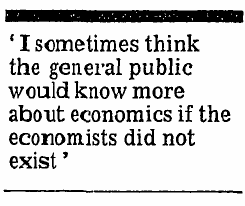
Back to DSGE models. I think they are totally useless. I like this quote by Francis Cripps from an article in The Guardian from 27 Feb 1979: Economists With A Mission:


Martin Wolf On Wynne Godley’s Sectoral Financial Balances Approach

Martin Wolf who usually writes good articles on macroeconomic developments wrote recently on the sectoral balances approach (which he uses frequently anyway).

In his recent post The Balance Sheet Recession In The US he writes:

… I look at this through the lens of “sectoral financial balances”, an analytical framework learned from the work of the late Wynne Godley. The essential idea is that since income has to equal expenditure for the economy, as a whole, (which is the same things as saying that saving equals investment) so the sums of the difference between income and expenditures of each of the sectors of the economy must also be zero. These differences can also be described as “financial balances”. Thus, if a sector is spending less than its income it must be accumulating (net) claims on other sectors.

The crucial point is that, since sectoral balances must sum to zero, a rise in the deficit of one sector must be matched by an offsetting change in the others. It follows that if the fiscal deficit is increasing, the sum of the surpluses of the other sectors of the economy must be increasing in a precisely offsetting manner.

These are tautologies. But the virtue of this framework is that it forces us to ask what drives what: are, for example, fiscal deficits in the US (or UK) driving the surpluses in other sectors or are the surpluses in the other sectors driving the fiscal deficit? We can obtain answers by examining what behaviour is changing…

and that:

… The idea that the huge fiscal deficits of recent years have been the result of decisions taken by the current administration is nonsense. No fiscal policy changes explain the collapse into massive fiscal deficit between 2007 and 2009, because there was none of any importance. The collapse is explained by the massive shift of the private sector from financial deficit into surplus or, in other words, from boom to bust…

Nice read: The Balance Sheet Recession In The US.

The sectoral balances approach should always be handled with supreme care. There are causalities running in all directions and one needs to ask what brings them to equivalence, what the value of policy instruments are, how is output changing etc.

The following is from Wynne Godley himself:

From the Levy Institute article The U.S. Economy – Is There A Way Out Of The Woods, November 2007

Although the three balances must always sum to exactly zero, no single balance is more a residual than either of the other two. Each balance has a life of its own, and it is the level of real output that, with minor qualifications, brings about their equivalence. Underlying the main conclusions of our reports is an econometric model in which exports, imports, taxes, and private expenditure are determined as functions of such things as world trade, relative prices, tax rates, and flows of net lending to the private sector. However, neither the knowledge that this is the case nor the perusal of any list of econometric equations will, on its own, impart any intuition as to why output moved as it did over any set period.

[boldening: mine]

Here’s from the article The U.S. Economy – A Changing Strategic Predicament, March 2003

It is well known to students of the National Accounts that the surplus of private disposable income over expenditure is equal to the government balance (written as a deficit) plus the current balance of payments (written as a surplus). While these balances are related to one another by a system of accounting identities, each has, to some extent, a life of its own that is reconciled with the other two via the aggregate income flow. The way the balances evolve provides a useful armature around which to organise a narrative account of economic developments, because any one of them is necessarily implied by the other two. Furthermore, the balances may give an early warning that unsustainable processes are taking place, for any high or rising balance implies a change in public, private, or foreign debts, which cannot grow without limit relative to income.

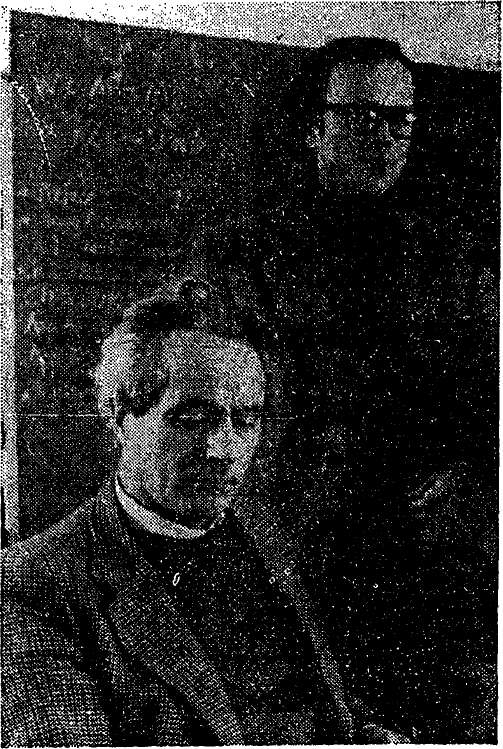
Wynne Godley with his CEPG partner Francis Cripps
(from Cambridge Group Sings The Blues, The Guardian, 17 April 1980)

A Quiz On National Accounts: Answers

In my previous post, I had the following questions:

  1. Can government expenditure be greater than 100% of gdp?
  2. Can Gross Fixed Capital Formation of an economy as a whole be negative?

The answer to both is yes. Commenters guessed the right answer and provided the example I was looking for (except the fourth below).

Here are examples to illustrate:

Government Expenditure

  • Open Economy: Imagine a small economy with a gdp of $1bn equivalent (easier to visualize than the United States with a gdp of $15tn having government expenditure greater than 100% of gdp). The government in one accounting period purchases weapons from abroad worth $2bn (maybe by sale of reserve assets or by increasing liabilities: irrelevant).
  • Closed Economy: Imagine if the government makes large transfers to households who are reducing spending drastically due to increasing uncertainties. They may eventually spend, but that’s eventually. For the accounting period, government expenditure can be large in principle than gdp. Remember, the p in gdp is for product(ion) and the standard formula “GDP = C + I + G” assumes that the government expenditure is for purchase of output and is not making transfers.

Gross Fixed Capital Formation

  • Open Economy: It’s a small economy with the private sector having few firms selling aircrafts abroad. During one period (such as a quarter), firms sell a lot of aircrafts – produced earlier – to the rest of the world and this makes the gross fixed capital formation negative.
  • Closed Economy: A bit more implausible than the above there examples but at least mathematically possible and that was what the question was. The example is firms selling huge amount of used cars to households. For households this is consumption and not capital formation. For firms, it is negative capital formation because cars used by firms is used in the production process and is counted as their fixed capital.

Of course, in the examples I ignore consequences (positive or negative) that may happen later.

A Quiz On National Accounts

Recently CNBC asked Paul Krugman to argue against government spending which provoked Krugman to write a blog post Zombies On CNBC.

Krugman is asked – how high can government expenditure go – 100%?

Okay two theoretical questions which are purely theoretical – nothing much to do with the discussion above.

  1. Can government expenditure be greater than 100% of gdp?
  2. Economists use the phrase net investment to describe investment net of consumption of fixed capital (“depreciation”). This can go negative if the consumption of fixed capital is higher than gross investment. This happened in the United States in 2009 – for example because of the deflationary environment. The System of National Accounts uses the phrase “gross fixed capital formation” and in quarterly gdp news release you see this phrase being used than investment. Can this go negative for an economy as a whole?

The fact that I have asked the two questions means the answer is likely yes.

So how?

Comments welcome – although I do not publish them.

In Search Of Alexander Hamilton

Earlier this year Paul Volcker said that “Europe is at an Alexander Hamilton moment”. Barry Eichengreen – who sometimes writes nicely – wrote this today in an article titled Europe’s Divided Visionaries:

… One strategy assumes that Europe desperately needs the policies of this deeper union now. It cannot wait to inject capital into the banks. It must take immediate steps toward debt mutualization. It needs either the ECB or an expanded European Stability Mechanism to purchase distressed governments’ bonds today.

Over time, according to this view, Europe could build the institutions needed to complement these policies. It could create a single bank supervisor, enhance the European Commission’s powers, or create a European Treasury. Likewise, it could strengthen the European Parliament. But building institutions takes time, which is in dangerously short supply, given the risk of bank runs, sovereign-debt crises, and the collapse of the single currency. That is why the new policies must come first.

The other view is that to proceed with the new policies before the new institutions are in place would be reckless. Mutualizing debts before European institutions have a veto over fiscal policies would only encourage more reckless behavior by national governments. Proceeding with capital injections before the single supervisor is in place would only encourage more risk taking…

Bloomberg investigates if there is an Alexander Hamilton in Europe: (edit: video no longer available.)

Not In His Lifetime, Says Krugman :(

Paul Krugman was in Spain recently.

In this video which has a lot of discussion on the European crisis, Krugman says that the ideal solution for the Euro Area will be federal but doesn’t hope to see it in his lifetime unless advances in medical sciences is made which will make him live longer. (Time: 1:22:36)

click to watch the video on YouTube

He rightly points that a degree of trust required to do so.

This is lacking and someone really needs to build this!

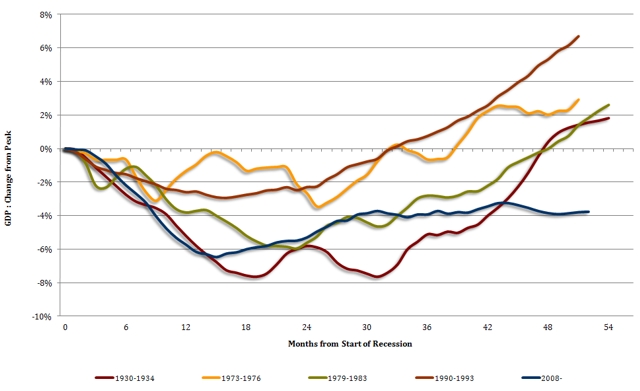
Also, from NIESR (link updated to one from July 2014, as the original link doesn’t work), the pace of the recovery compared in various deflationary episodes in the UK’s history:

“… Step By Step, Cede Responsibilities To Europe”

My previous post “Not In My Lifetime” – The Muddled Road Toward An Integrated Europe had some responses – mostly saying I was too kind to Angela Merkel and Wolfgang Schäuble and that ceding powers to a supranational authority will lead to imposing of draconian rules!

Meanwhile I came across these two articles from France 24Europe needs ‘reinforced political union’, says Merkel and Merkel rejects debt-pooling proposal ahead of EU talks. According to the first article:

“We need more Europe… a budget union… and we we need a political union first and foremost,” Merkel told German public television. “We must, step by step, cede responsibilities to Europe.”

My answer is while the German leaders have panicked and imposed severe austerity rules on nations due to pressures from the financial markets, their intention of having “More Europe” is certainly a good one. It took me a while to understand that it’s Germany which is open to having a full integration while others do not. There’s a lack of trust here, given what has happened over the past 2-3 years.

There are three ways to approach the crisis as I see it.

The first is to impose trade barriers on each other. This gives fiscal policy more room to expand domestic demand without running into a balance of payments crisis (again) and the European Central Bank can act as the lender of the last resort if it were to understand that the stocks of debts would be sustainable. However imposing barriers is against the philosophy of the “common market”. Hence this is ruled out.

The second is to coordinate a fiscal expansion with the ECB acting as a lender of last resort if needed. But how does this coordination happen and on what terms? This also requires institutions and will require summit after summit – if previous experiences are any guide.

The third is the German plan to have a supranational fiscal authority which is given the power to make expenditures and earn via taxes. In my opinion this is what Germany is looking for and not a small institution which is obsessed with balanced budgets and no fiscal powers. Of course if there is a supranational fiscal authority the nations may have to balance budgets(!) while this institution itself runs a deficit and is involved in substantial transfer of fiscal resources (quite opposite of what Charles Goodhart thinks!).

Economists such as Nouriel Roubini object to the German plan citing surrendering of sovereignty as the reason. It should however be noted that by signing the Maastricht Treaty Euro Area nations have already surrendered their sovereignty. Now, they could either cede more powers to “Europe” or (since there is a lack of trust) decide to break the Euro Area.

There are advantages of breaking up but it will be a terrible thing for Europe. It is also unclear how it can be implemented – given that at some level the Euro Area is integrated. With a lack of trust, this may be the best thing to do but in my opinion, it is the task of the European leaders to work toward gaining each others’ trusts.

The reason Angela Merkel has rejected the “debt pooling” plan of Herman Van Rompuy, José-Manuel Barroso, Jean-Claude Juncker and Mario Draghi (and also pushed by George Soros) is that it really does not solve anything except satiating the instant gratification wants of the financial markets. The Germans haven’t rejected the €-bonds per se.

Merkel’s plan – what’s called transfer union in Germany may meet with substantial opposition by German citizens. The Germans tend to think that they will be paying higher taxes without knowing that at the same time their incomes will be higher because the new union will be substantially less deflationary. A referendum may likely fail and this remains a challenge. The Euro Area needs an Alexander Hamilton as Ronald McKinnon argued recently.

My purpose of writing this post was to point out the in the media – especially the financial media – Germany is shown to be the villain. For example I think Wolfgang Munchau – who generally writes well said this in the Financial Times (The real victor in Brussels was Merkel)

The most important event last week was probably not the agreement at the summit anyway, but the statement by Ms Merkel that there will be no eurozone bonds “for as long as I live”. My belief is that this statement reveals she is not serious about political union, to which she has been paying lip-service over the past few weeks. Her tactics remind me of the “coronation theory” of the 1980s: the Bundesbank used to say that monetary union was acceptable but only after full political union was completed. It was another way of saying never. I always suspected all this talk about long-term solutions might be a ruse. Now, it seems, we know.

If Ms Merkel is right and there are no eurozone bonds in her lifetime, the eurozone will not survive. Without eurozone bonds or a change in ECB policy, Italy’s and Spain’s debt – and eurozone membership – is not sustainable. That was as true on Wednesday as it is today.

This is a slight misrepresentation of Merkel because she said that there will be no €-bonds in the plan presented in the last week’s summit (which didn’t have a common fiscal policy) and hence not without any qualifications.

“Not In My Lifetime” – The Muddled Road Toward An Integrated Europe

Both Angela Merkel and the German Finance Minister Wolfgang Schäuble have been quoted in the media as saying that they won’t go ahead with the “€-bills” and plans like that in their lifetime! Of course such quotes are incompletely reported and what they mean is that they won’t have a plan such as that without a common fiscal policy.

In the ongoing Summit, European leaders came up with a few plans which led to financial markets rallying. The Italian FTSE MIB Index was up 6.59% today!! There was one plan which didn’t take off and this was the plan of having a “redemption fund”. The formal proposal is here: TOWARDS A GENUINE ECONOMIC AND MONETARY UNION Report by President of the European Council Herman Van Rompuy

Of course this didn’t go through because the two German leaders wouldn’t have allowed it in their lifetimes! So what does Germany really want?

To understand this we must first understand that – as argued by Wynne Godley in 1992 – to join a monetary union nations should surrender their sovereignty with this sovereignty being taken over by a supranational authority (which was absent in the Maastricht Treaty):

I recite all this to suggest, not that sovereignty should not be given up in the noble cause of European integration, but that if all these functions are renounced by individual governments they simply have to be taken on by some other authority. The incredible lacuna in the Maastricht programme is that, while it contains a blueprint for the establishment and modus operandi of an independent central bank, there is no blueprint whatever of the analogue, in Community terms, of a central government. Yet there would simply have to be a system of institutions which fulfils all those functions at a Community level which are at present exercised by the central governments of individual member countries.

The counterpart of giving up sovereignty should be that the component nations are constituted into a federation to whom their sovereignty is entrusted. And the federal system, or government, as it had better be called, would have to exercise all those functions in relation to its members and to the outside world which I have briefly outlined above.

Merkel and Schäuble want to move ahead with the full creation of a federation – presumably headquartered in Brussels and they have the task of managing the fiscal decisions for the whole of the Euro Area. Since this institution will run deficits, it is natural that it will finance the difference between expenditure and taxation by issuing bills and bonds (which will be the real €-bonds). Hence the two leaders have qualified their statements but this has been quoted everywhere as some kind of comedy of errors!

The two leaders have the double task of convincing the German politicians and German public on the one hand and politicians from the rest of the Euro Area on the other hand. In the middle of this, they see this plan from Herman Van Rompuy, José-Manuel Barroso, Jean-Claude Juncker and Mario Draghi adding to confusions. The plan from the four EU leaders still has no supranational institution which makes financial decisions for the whole Euro Area but only a special purpose entity presumably retired after 25 years.

The important difficulty in the creation of a supranational institution which will manage the finances of the whole Euro Area (and not any “sinking fund”) is that the current setup is an incomplete one where nations’ governments still have a good amount of power in spite of them having surrendered most of their sovereignty.

While convincing the German citizens may be a hard task, Merkel and Schäuble are facing difficulties also in convincing other European leaders. Other nations do not wish to surrender whatever powers they still have but in the process do not understand what an integration means. Their leaders could have chosen to not join the Euro Area – just like what Mrs Thatcher did for the UK. Now that they have joined it and given it is difficult for any one nation to leave, it is in their best interest to go ahead with the full integration which has a supranational fiscal authority but this comes with surrendering more powers!

As Wynne Godley argued further:

If a country or region has no power to devalue, and if it is not the beneficiary of a system of fiscal equalisation, then there is nothing to stop it suffering a process of cumulative and terminal decline leading, in the end, to emigration as the only alternative to poverty or starvation. I sympathise with the position of those (like Margaret Thatcher) who, faced with the loss of sovereignty, wish to get off the EMU train altogether. I also sympathise with those who seek integration under the jurisdiction of some kind of federal constitution with a federal budget very much larger than that of the Community budget. What I find totally baffling is the position of those who are aiming for economic and monetary union without the creation of new political institutions (apart from a new central bank), and who raise their hands in horror at the words ‘federal’ or ‘federalism’. This is the position currently adopted by the Government and by most of those who take part in the public discussion.

As Jim O’ Neill of Goldman Sachs mentions in a recent interview to Bloomberg, the Germans are open to this but unfortunately, the French have objections to this route.

In the above video (edit: no longer available), O’ Neill (jokingly called Governor O’Neill by Tom Keene of Bloomberg because he is said to be the top man for the post of the chief of the Bank of England when Mervyn King’s term ends soon) argues the Europeans are known to leave it till the last moment – when it’s on the brink. Till then they will continue to muddle. Unfortunately for Merkel and Schäuble, solving short term issues makes the financial market conditions ease substantially, the opposite of what they want, because only when other Euro Area nations are in a lot of trouble will they be ready to accept the German solution. Of course this is a sad way to solve the problem but Schäuble has been quoted in the press saying that the EA needs a crisis to make any progress.

Unfortunately the financial markets rally!

How ironic!
U.S. Net Indebtedness Above $5T Now

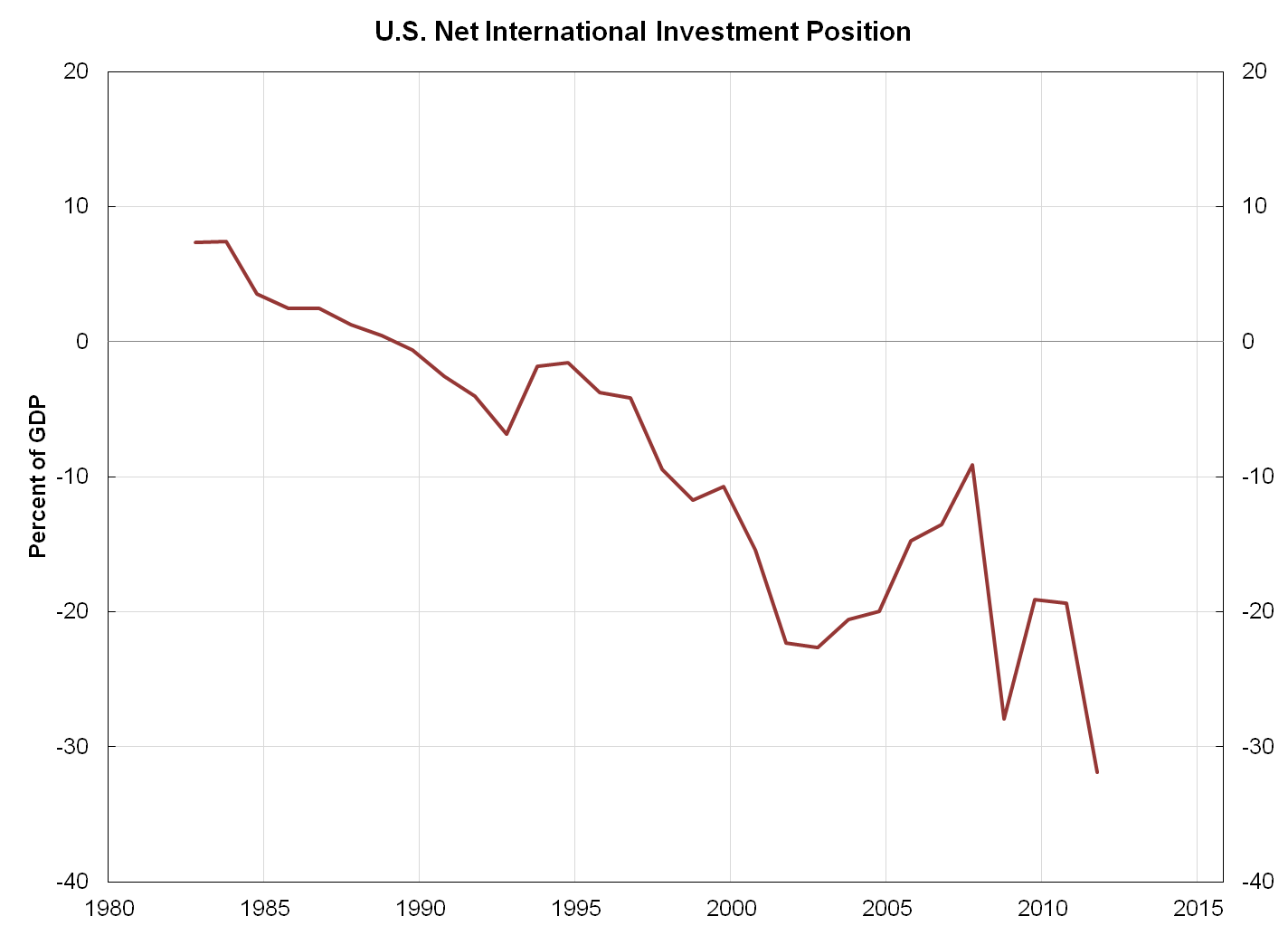
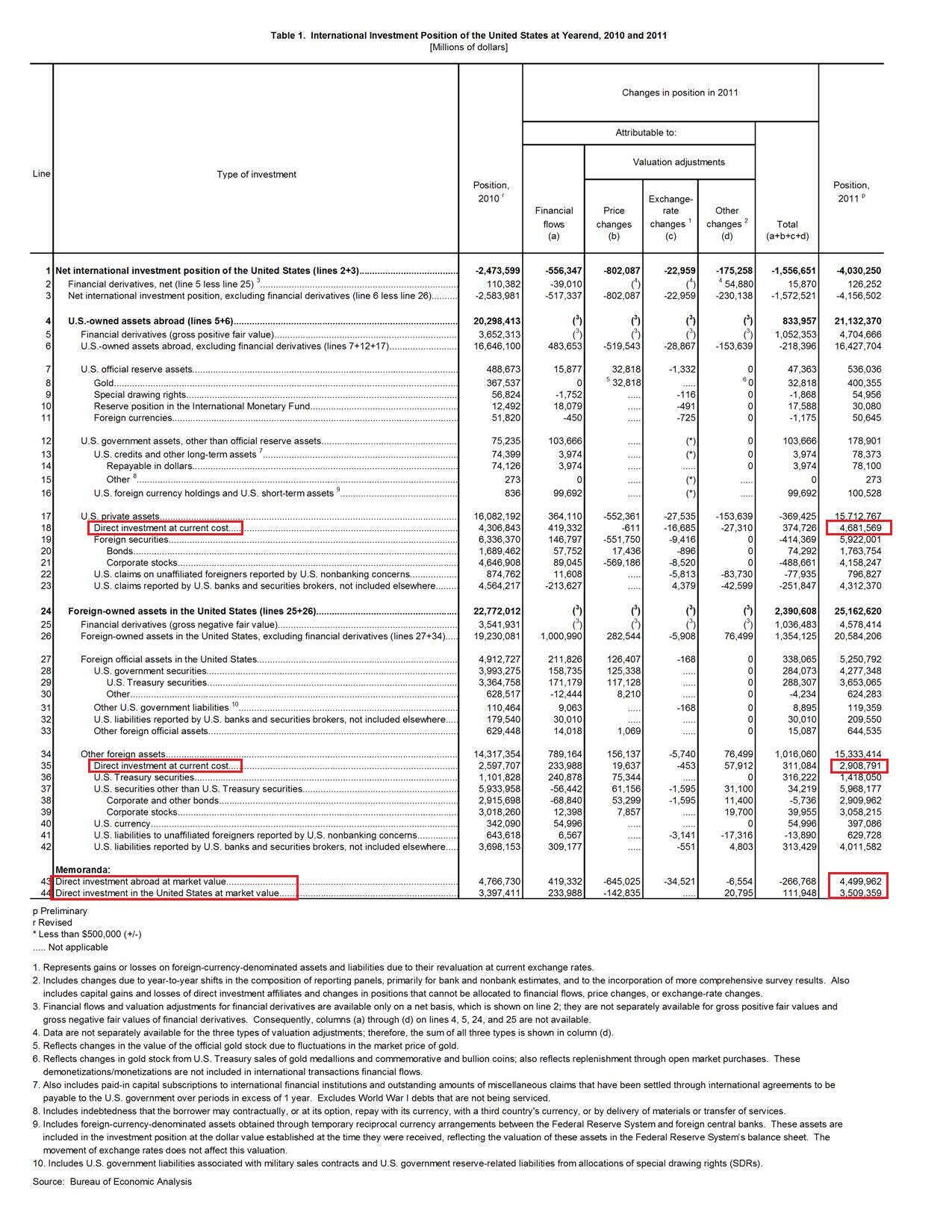
The BEA reported yesterday that the U.S. Net International Investment Position at the end of 2011 was minus $4,030.3bn. The large change compared to the end of 2010 (where it was -$2,473.6bn) was due to large revaluations of assets and liabilities in addition to the current account deficit. See the BEA blog on this.

For IIP, Foreign Direct Investments are measured at “current costs”. When evaluated at market prices, the net international investment position at the end of 2011 would have been minus $4,812.4bn. The NIIP also includes official gold holdings and if this is excluded, the net indebtedness is greater than $5T.

The following is the NIIP as a percent of GDP at market prices.

There are several reasons this by itself hasn’t worked against the U.S. The U.S. dollar is the reserve currency of the world* and secondly direct investments make huge returns for the U.S. (It should still be noted that the current account deficits bleed demand in the U.S. at a massive scale). Direct investment abroad at the end of 2011 was about $4.5tn and foreign direct investment by nonresidents in the United States $3.5T.

U.S. International Investment Position

(click to enlarge)

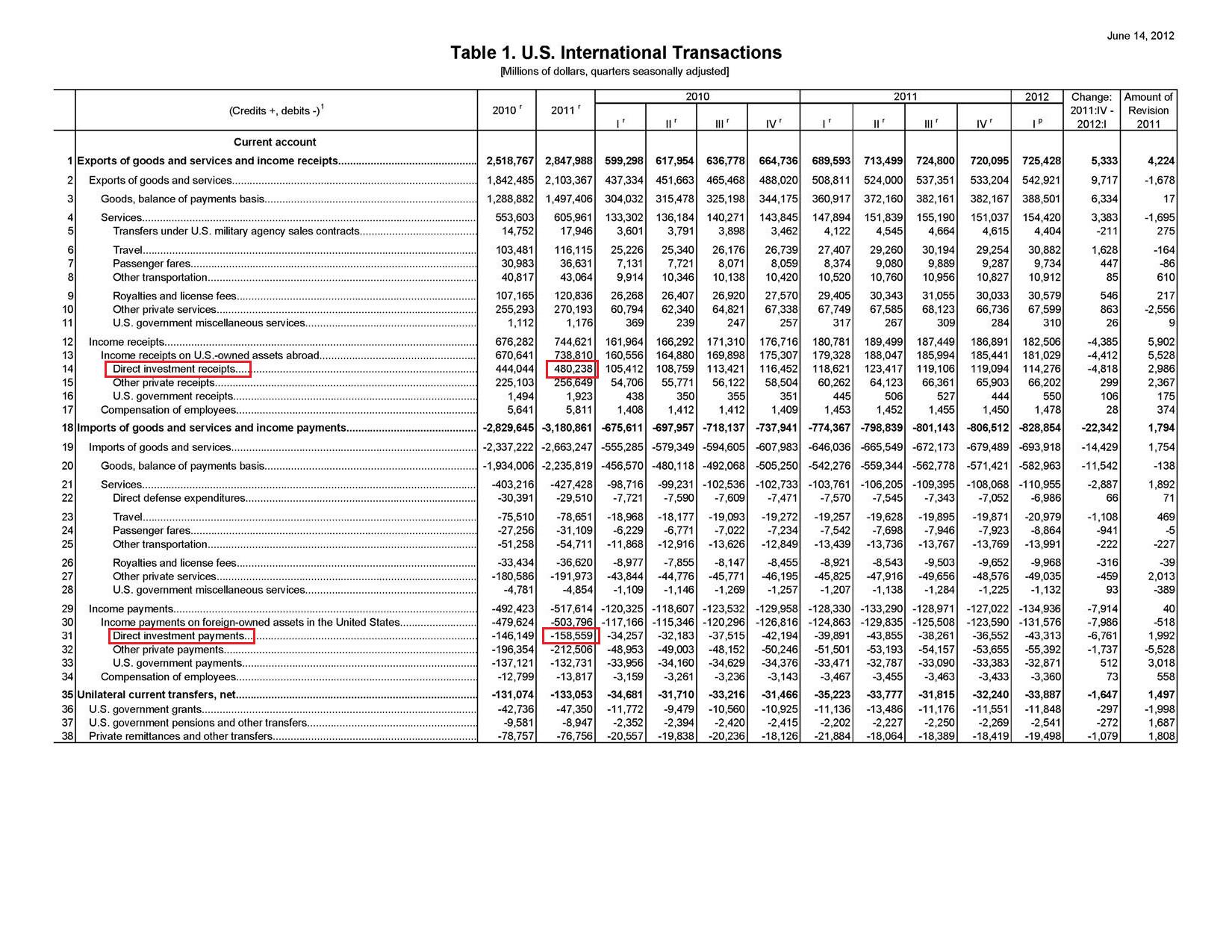
The direct investment abroad makes a huge killing for the U.S. as can be seen from the balance of payments. In 2011, direct investment receipts was around $480bn and direct investment payments only $159bn.

U.S. Current Balance of Payments

(click to enlarge)

 *non-direct investment income is already against the United States’ favour though.