In the last post, I linked to John J. Mearsheimer’s paper Bound To Fail: The Rise And Fall Of The Liberal International Order. The paper was more from a political perspective than from a perspective of political economy, although it did go into the economics of it.
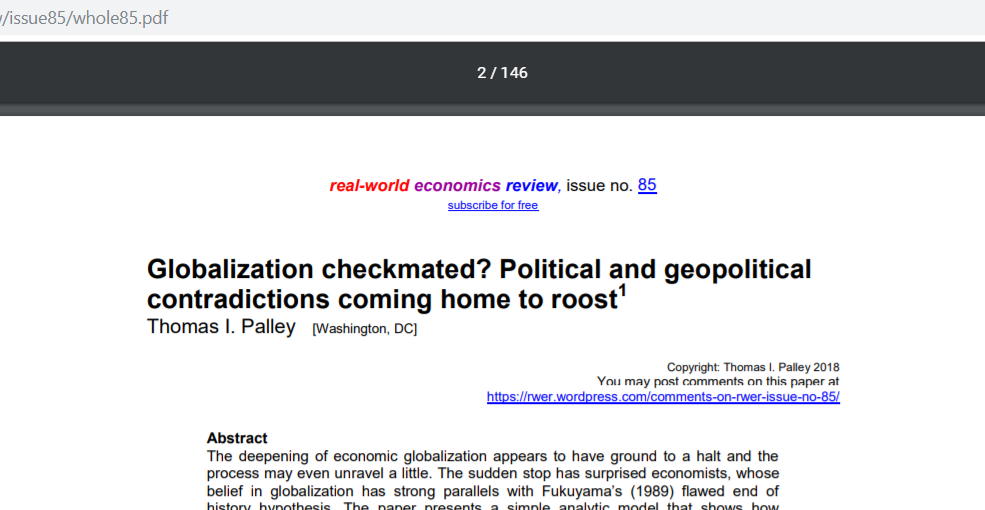
There’s a Post-Keynesian paper by Thomas Palley published last year, I thought I should recommend reading, since it goes into the political economy aspect of it. Also it is rooted more in the heterodox Keynesian perspective, unlike Mearsheimer who although criticises the US establishment, seems to want to propose an order which benefits the United States the most, not a new economic order which benefits the whole world.
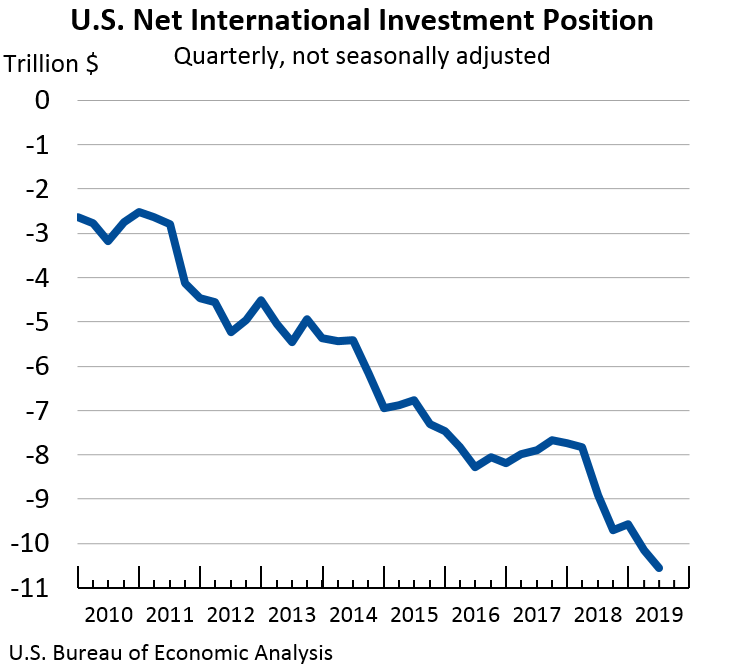
The liberal international economic order benefited the United States, or at least the “top 1” but because of countries gaming the system, started to backfire. The US has large current account deficits as a consequence of which its negative net international investment position grew larger and larger as this BEA chart indicates:
The solution is to dismantle the liberal international economic order in favour of new rules of the game which benefit everyone, not just oligarchs.
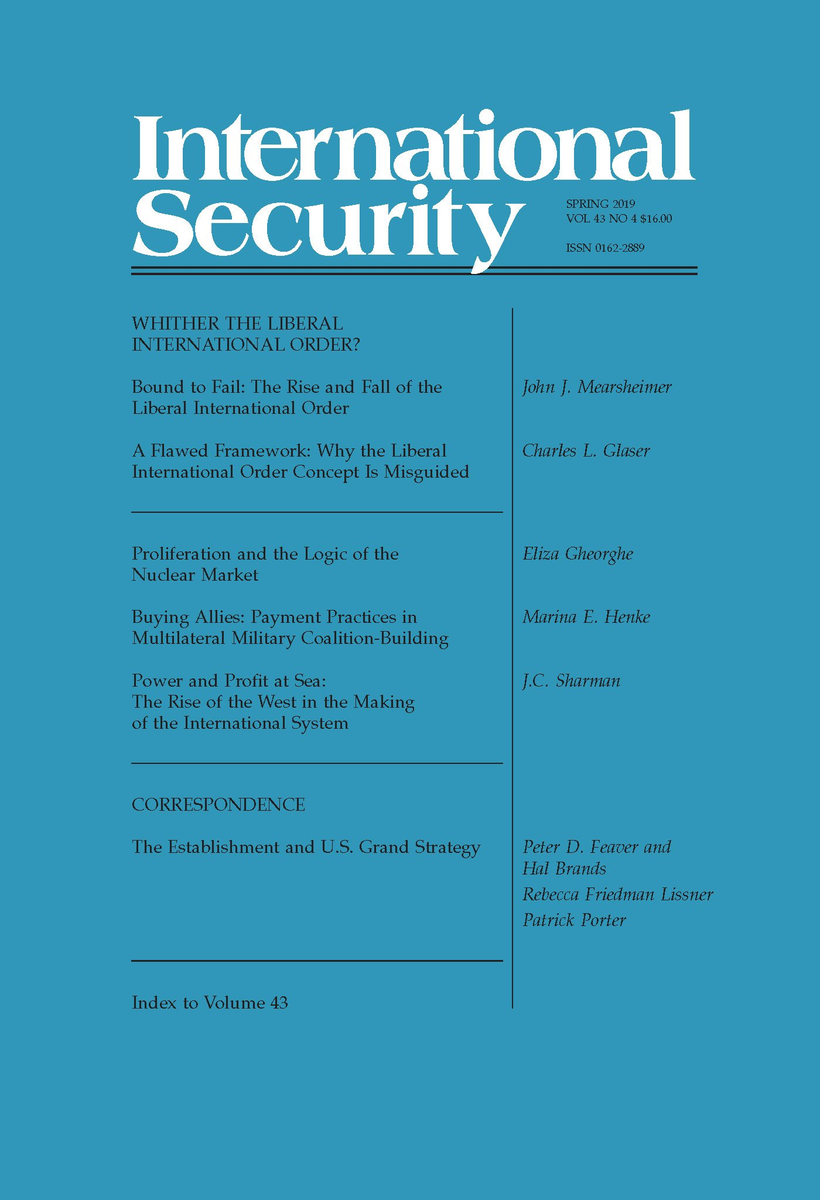
I came across this fantastic article by John J. Mearsheimer, from earlier this year, on how the liberal international order is failing. It’s written more from a political perspective (and mainstream too) than from a heterodox political economy perspective but it’s worth a read.
From the introduction:
Abstract
The liberal international order, erected after the Cold War, was crumbling by 2019. It was flawed from the start and thus destined to fail. The spread of liberal democracy around the globe—essential for building that order—faced strong resistance because of nationalism, which emphasizes self-determination. Some targeted states also resisted U.S. efforts to promote liberal democracy for security-related reasons. Additionally, problems arose because a liberal order calls for states to delegate substantial decisionmaking authority to international institutions and to allow refugees and immigrants to move easily across borders. Modern nation-states privilege sovereignty and national identity, however, which guarantees trouble when institutions become powerful and borders porous. Furthermore, the hyperglobalization that is integral to the liberal order creates economic problems among the lower and middle classes within the liberal democracies, fueling a backlash against that order. Finally, the liberal order accelerated China’s rise, which helped transform the system from unipolar to multipolar. A liberal international order is possible only in unipolarity. The new multipolar world will feature three realist orders: a thin international order that facilitates cooperation, and two bounded orders—one dominated by China, the other by the United States—poised for waging security competition between them.
Introduction
By 2019, it was clear that the liberal international order was in deep trouble. The tectonic plates that underpin it are shifting, and little can be done to repair and rescue it. Indeed, that order was destined to fail from the start, as it contained the seeds of its own destruction.
The fall of the liberal international order horrifies the Western elites who built it and who have benefited from it in many ways. These elites fervently believe that this order was and remains an important force for promoting peace and prosperity around the globe. Many of them blame President Donald Trump for its demise. After all, he expressed contempt for the liberal order when campaigning for president in 2016; and since taking office, he has pursued policies that seem designed to tear it down.
It would be a mistake, however, to think that the liberal international order is in trouble solely because of Trump’s rhetoric or policies. In fact, more fundamental problems are at play, which account for why Trump has been able to successfully challenge an order that enjoys almost universal support among the foreign policy elites in the West. The aim of this article is to determine why the liberal world order is in big trouble and to identify the kind of international order that will replace it.
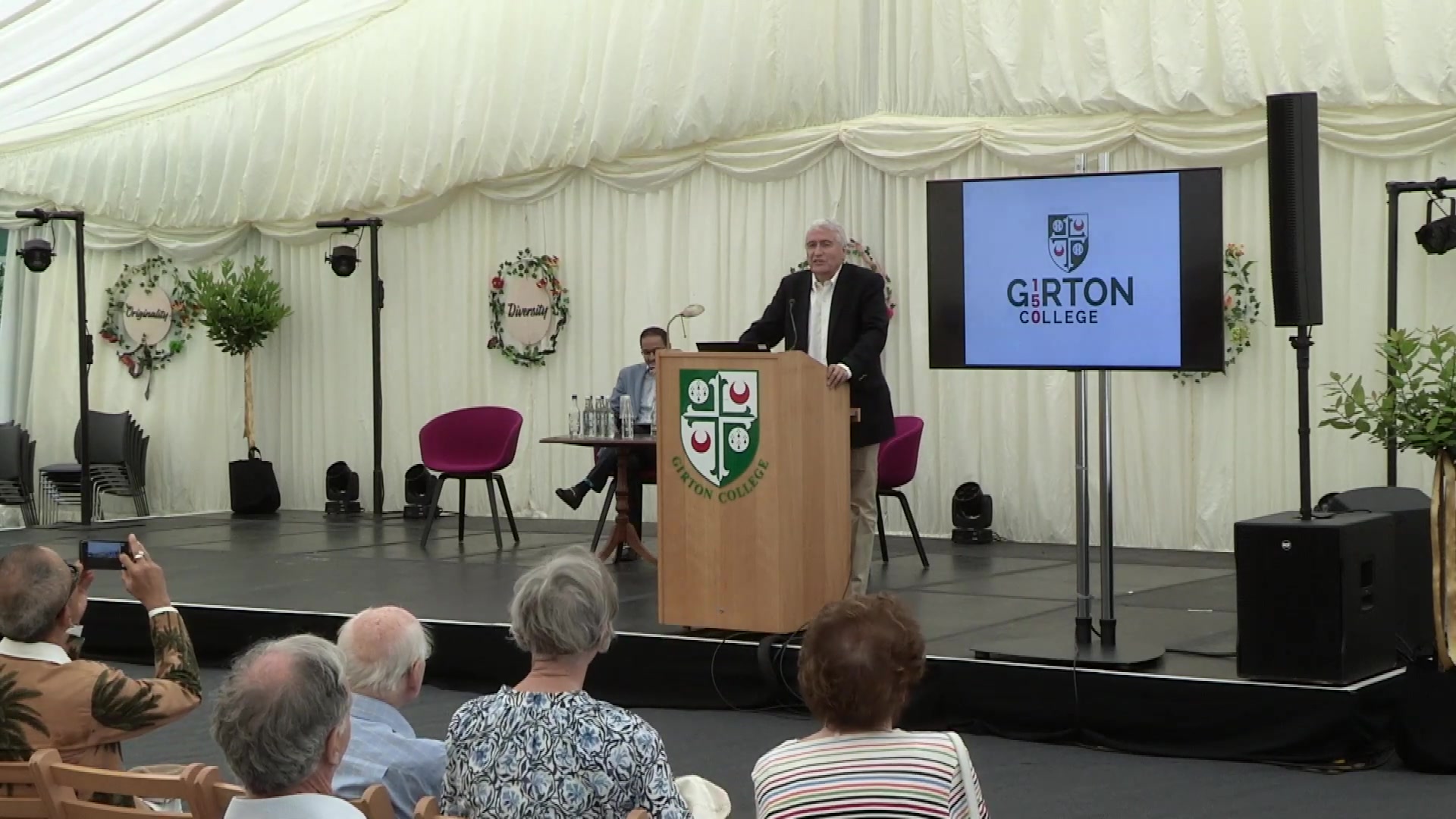
Good speech on Joan Robinson by John Eatwell from earlier this year at Girton College
Eatwell argues how Robinson was a top economist. He talks of the “new mercantilism”, on how free trade creates a deflationary bias on the world economy, many among other things.
Lance Taylor has a new working paper Synthetic MMT: Old Line Keynesianism With An Expansionary Twist with a summary blog post at INET.
Paper linked in that post.
He talks of the reluctance of Neochartalists to talk of increases in tax rates. Politicians such as Bernie Sanders and Elizabeth Warren running for the President of the United States as a Democrat have proposed plans to raise government spending. There is also a proposed legislation, Green New Deal. These programs may take the US economy to full capacity and hence it is important to take of increases in tax rates. Sanders and Warren have put forward some plans to raise taxes, especially on the highly wealthy. Of course, full capacity or not, tax laws affect the distribution of the national income, so need to be discussed and debated independently.
Thomas Palley has critiqued the neochartalists for ignoring these issues.
Taylor also talks of sustainability of deficits and debts because of external imbalance. This in my opinion is highly important.
Taylor calls neochartalism V.F.T., or Vintage Fiscal Theory.
There’s a new paper by Robert Chernomas and Ian Hudson which critiques the economics of Daron Acemoglu and Esther Duflo. The paper was written earlier but it’s publication coincides with the recent award of the Nobel Prize, of which Duflo was one of the recipients.
Abstract:
This article is a critical review of the work of Esther Duflo, recently awarded the 2019 Nobel Prize for economics, and of Daron Acemoglu, who like Duflo has received the John Bates Clark Medal in recognition of research in development economics. Aside from the differences in the two scholars’ approaches, we argue that both downplay the role of the state and of international economic structures that influence national development, thereby obscuring the actual existing causes of contemporary underdevelopment.
From the conclusion:
It would be difficult to argue that the power of contemporary MNCs, the IMF and foreign governments did not have a significant, if not determining, influence on the development of many poor countries. Yet it would be difficult to find any mention of these recent external actors in either Duflo or Acemoglu’s work.
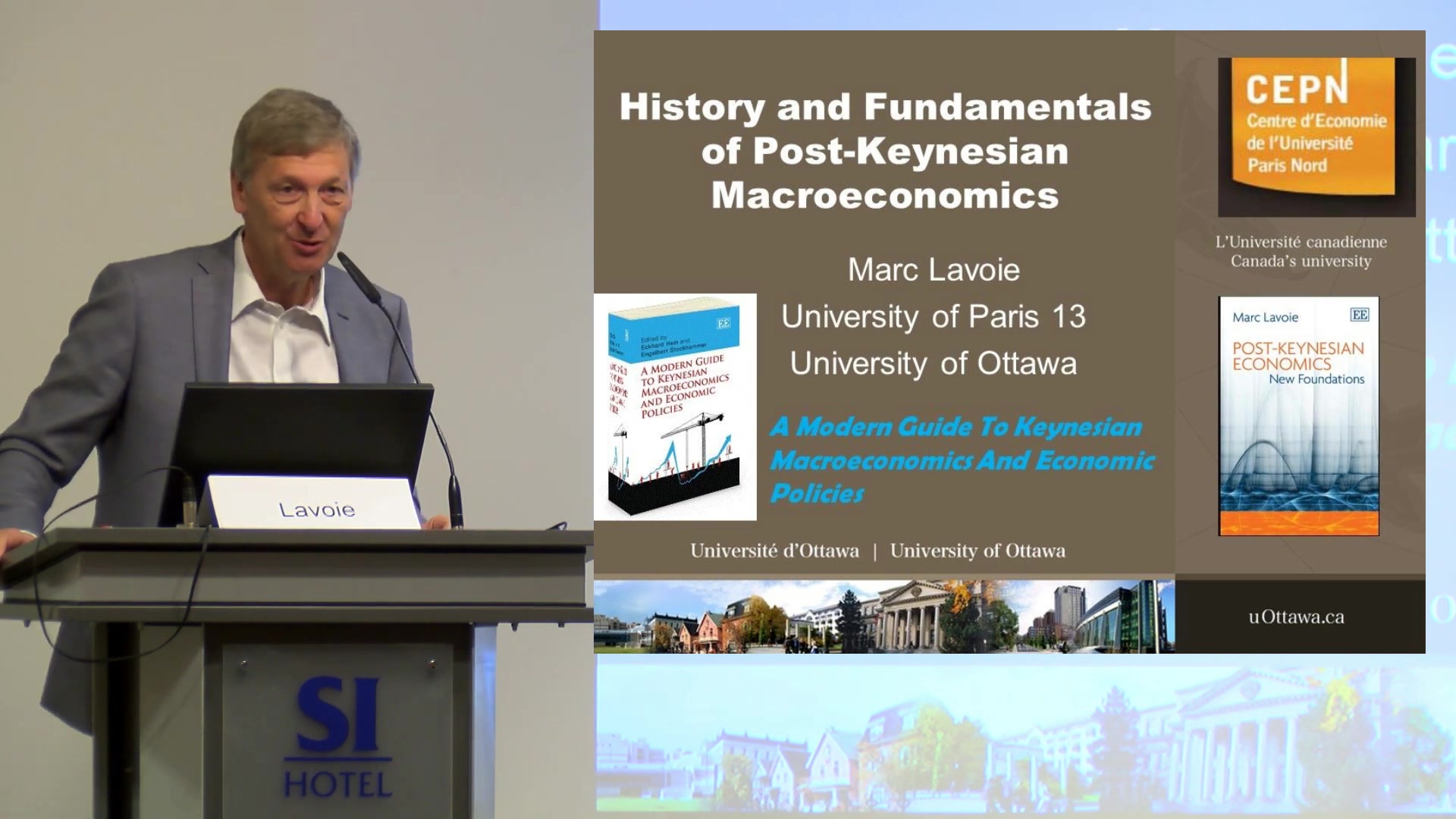
Marc Lavoie talks on Post-Keynesian macroeconomics at the recent conference Euro At 20 – Macroeconomic Challenges in Berlin
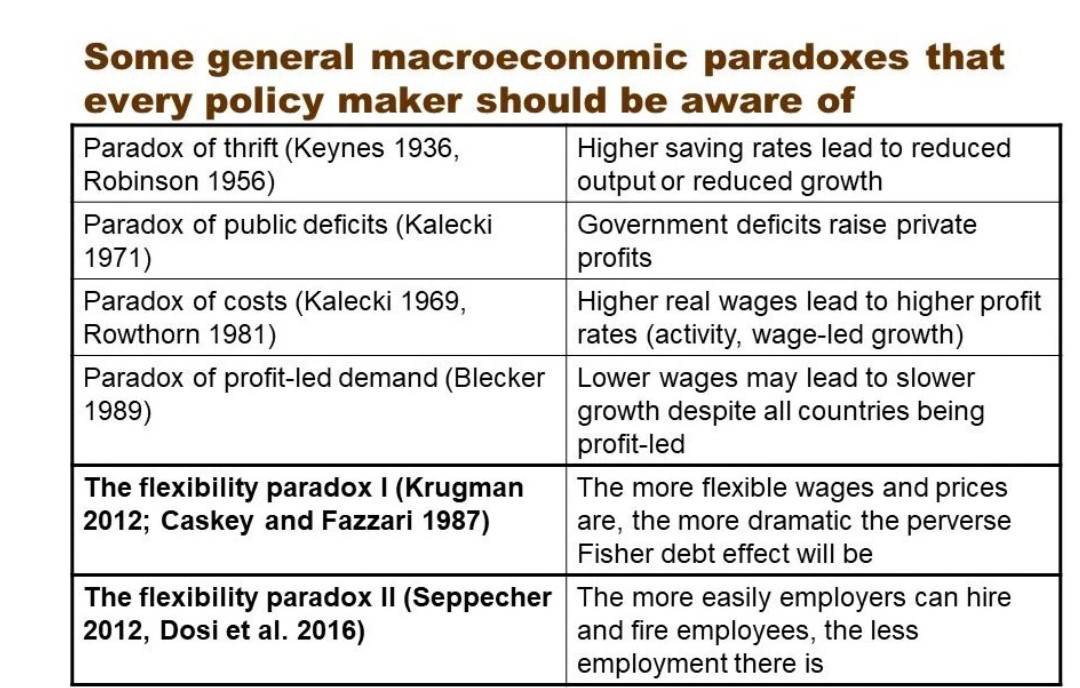
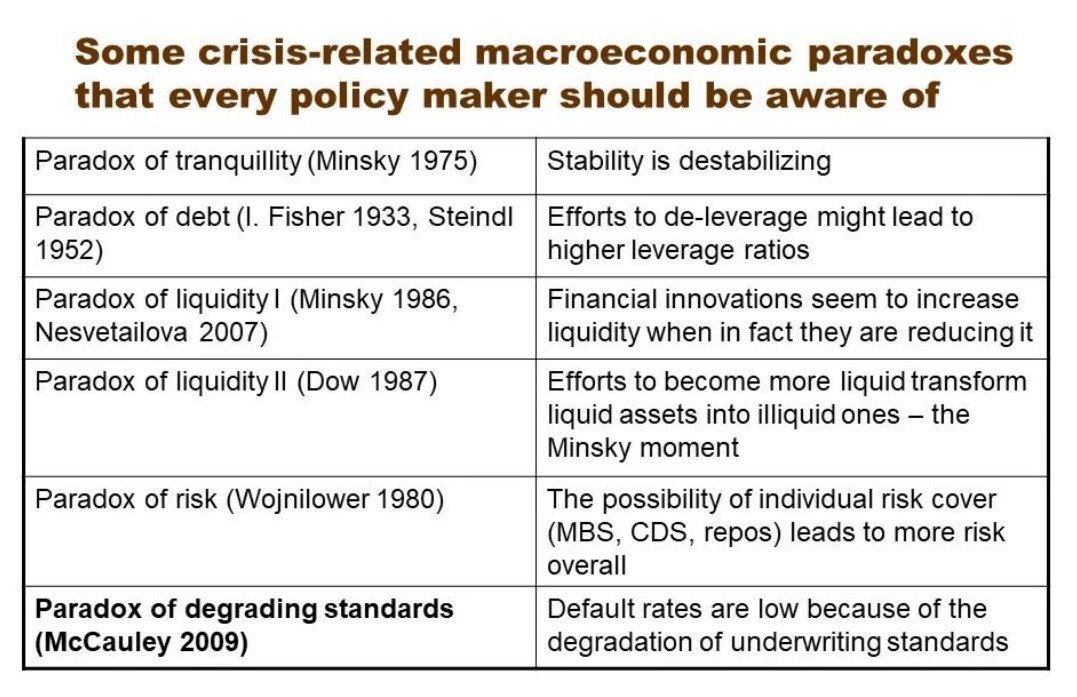
There were some interesting additions to his table on macro paradoxes at 31:20 in the video on flexible wages leading to more instability, which is counter-intuitive from a neoclassical viewpoint.
The latest episode of the podcast Citations Needed has a great discussion of the political economy around “automation”. It features Mark Weisbrot of CEPR and Peter Frase of Jacobin.
The episode talks of the misleading discourse and and post-truths in mainstream economics and media. For example Weisbrot points out how the US trade imbalance has a lot to contribute to reduction in manufacturing employment.
Last year, Paul Krugman had an article on globalisation and how he got it wrong. Of course, typically, the ones doing mea culpa rarely admit it that they were totally wrong and spin it the way which is most opportunistic. I had a post on it.
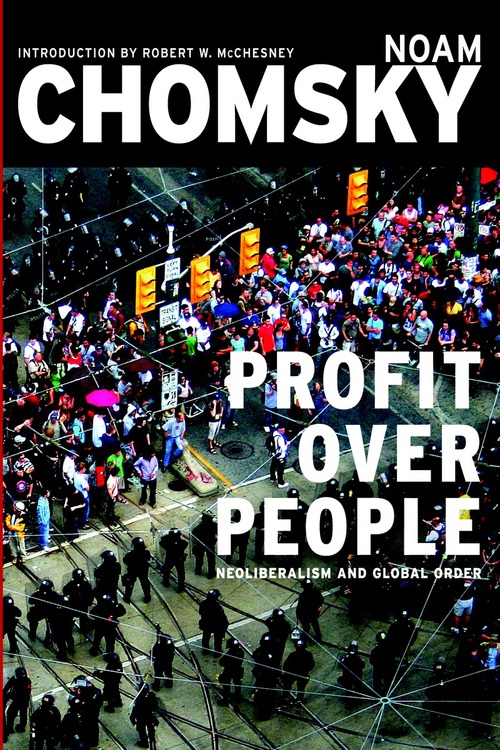
Noam Chomsky wrote a book Profit Over People in 1999 with an Introduction by Robert McChesney who had a fanstastic description of globalisation:
And nowhere is the centrality of governments and policymaking more apparent than in the emergence of the global market economy. What is presented by pro-business ideologues as the natural expanson of free markets across borders is, in fact, quite the opposite. Globalization is the result of powerful governments, especially that of the United States, pushing trade deals and other accords down the throats of the world’s people to make it easier for corporations and the wealthy to dominate the economies of nations around the world without having obligatons to the peoples of those nations. Nowhere is the process more apparent than in the creation of the World Trade Organization in the early 1990s, and, now, in the secret deliberations on behalf of Multilateral Agreement on Investment (MAI).
Perry Anderson in Situationism À L’envers? in New Left Review, Issue 119, Sep-Oct 2019:
Liberalism has always contained different shades, and its dominant version has varied across countries and periods. In the capitalist world, going back to the eighties, the line of division separating a liberal politics from a politics of the left is their respective attitudes to the existing order of things: does it require structural change or situational adjustment? The degree envisaged of each defines relative locations on either side of the dividing-line. To see where Tooze’s position might lie requires a sense of the dominant liberalism of the period. That comes in two inter-related packages. Between states, the ‘liberal international order’ has for thirty years been the touchstone of geopolitical reason: free markets, free trade, free movement of capital and other human rights, policed by the most powerful nation on earth with help from its allies, in accordance with its rules and its sanctions, its rewards and its retributions. Within states, ‘neoliberalism’: privatization of goods and services, deregulation of industries and of finance, fiscal retrenchment, de-unionization, weakening of labour, strengthening of capital—compensated by recognition of gender and multicultural claims.
The first has reigned far more unchallenged than the second. Very few liberals have seriously contested the principles of free trade, the primacy of the United States, or the rule of international law as enshrined in a United Nations whose decisions the us has for the most part been able to determine at will. The liberal international order remains a precious icon. Many, on the other hand, have questioned or resisted the full application of neoliberal measures within their own societies, nowhere implemented in their entirety. The extent to which the first shapes the intellectual universe of contemporary liberalism can be judged by the adaptation of leading minds once on liberalism’s left to its requirements: thinkers like Rawls, Habermas and Bobbio all furnishing apologetic glosses on us wars of intervention against states declared outlaws by Washington, with or without the affidavit of the Security Council. Tooze has never compromised himself in this way. But the language of ‘global economic governance’, cleansed of any reference to its most prominent innovation, the proliferation of sanctions to strangle or bludgeon recalcitrant countries into line—‘war by other means’, as Ambassador Blackwill candidly describes it—offers a route to much the same.