Link

Dani Rodrik On Globalisation After COVID-19

Suppose a poor isolated country opens to business to the rest of the world. There is high risk that producers in that country file for bankruptcy because of competition from foreign producers. Hence the poor country might look at various ways of integrating, such as protection of its industries.

In Post-Keynesian theory, success and failures of nations are strongly the result of performance of corporations in world markets. Winners keep winning and those are left behind keep struggling. Free trade destroys countries.

Of globalisation isn’t just about trade but also finance. So one pet peeve of activists against globalisation is the investor rights agreements which gives corporations power over national governments. And globalisation is also about movement of people for employment and business.

Dani Rodrik is a mainstream economist but his views are on the dissenting edge of mainstream, so he is interesting despite his shortcomings.

So for example, he realises that the rules of the game of globalisation is the result of rigging by top corporations but then claims that the economics profession is innocent:

Political settlements are the joint product of vested interests and prevailing ideas. Our present system of globalisation is no different. After the Bretton Woods regime ran aground with the oil shocks of the 1970s, many developing nations proposed a new mode of integration organised through the UN agencies. But in the end the west and its allies pushed through rules that served the interests of large corporations, financial markets, and skilled professionals quite well, but did not do much for others—those who did not have the networks, skills, or assets to profit from global markets. Had there been powerful lobbies pushing for global co-operation over public health or the environment—and had those in power not bought into the misguided belief that “mainstream” economics dictated they pursue economic efficiency over every other priority, and ever-freer trade as an end in itself—then we might have erected one of the other types of globalisation I just sketched.

On “open-borders”, he rightly dissents from the mainstream view:

A complete opening of borders to foreign labour is neither feasible nor desirable.

Although Rodrik’s ideas are a break from “mainstream”, it doesn’t go too far. Post-Keynesians stress outcome based rules such as balance-of-payments targets via asymmetric protectionism where poor countries are allowed a mix of higher industrial policy and protectionism without facing retaliation and creditor countries being required to boost domestic demand, remove import restrictions and lend to poor countries at cheap interest rates. All this with a coordinated fiscal expansion which maintains economies at full employment.

Tony Benn On The EU

The Euro Area’s response to the covid-19 crisis is austere. This might lead to more dissatisfaction with the European Union project as many are predicting.

Yanis Varoufakis has been more critical of the Euro Area and the European Union in general in recent times, although he says he is in the team which wants to reform the EU from within. In a recent interview with Unherd, he makes it clear why the UK Labour lost the recent election: the push for a second referendum wasn’t liked by the voters and vote was a backlash against them.

Anyway I found a great clip from Tony Benn, the great leader of Labour, and it’s clear how the EU was hated by the left-wing but that it’s different now, unfortunately.

Tony Benn, in Parliament, 1990 (53:00 in the full video, clipped below):

Is the Prime Minister aware that what we are really discussing is not economic management, but the whole future of relations between this country and Europe? This issue is not best expressed in 19th-century patriotic language or in emotive language about which design is on the currency. The real question is whether, when the British people vote in a general election, they will be able to change the policies of the previous Government. It is already a fact, as the House knows full well, that whatever Government are in power, our agricultural policy is controlled from Brussels, our trade policy is controlled from Brussels and our industrial policy is controlled from Brussels. If we go into EMU, our financial policy will also be controlled. It is a democratic argument, not a nationalistic argument.

However, given that the right hon. Lady is a member of the Government who took us into the European Community without consulting the British people, given that she was Prime Minister in the Government who agreed to the Single European Act without consulting the British people, and given that she has now agreed to joining the exchange rate mechanism without consulting the British people, we find it hard to believe that she is really intent on preserving democracy rather than gaining political advantage by waving some national argument around on the eve of a general election. That is why we do not trust her judgment on the matter.

click to view the clip

There are many clips of Tony Benn on the EU on YouTube, but this is my favourite.

Quinn Slobodian’s Review Of Capital And Ideology

Yesterday I had recommended Ingrid Harvold Kvangraven’s review of Thomas Piketty’s book Capital And Ideology, which raised important points about the book totally ignoring the need for a rebalancing of global finance and production.

However, there’s another perspective to look at a great point missed out in the review.

Quinn Slobodian has a Twitter thread, where he points out why Piketty’s book is important. He says:

[T]he central point of piketty’s book-in-the-book is devastating: left parties have gone from being the party of the poor and less educated to the party of the highly educated, losing ever more voters to the right.

and also on the EU Referendum/Brexit:

among the most striking passages are when he concedes the “no” votes on referenda and the “leave” vote on brexit were rare moments of clear classist voting pattern: “a complete divorce between the less advantaged and the European project”

Hence the need for an egalitarian internationalist movement.

Link

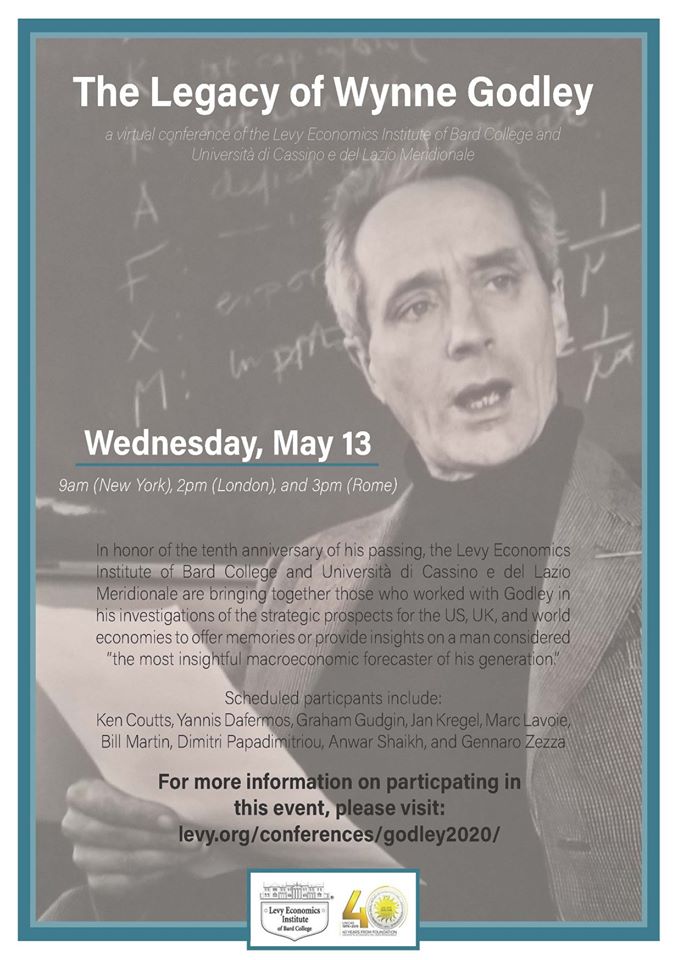
📅 Conference: The Legacy Of Wynne Godley

Levy Economics Institute has announced a virtual conference in commemoration of Wynne Godley on May 13th.

The site says that you can join by Google Meet.

Marc Lavoie’s talk is Wynne Godley And The Monetary Circuit. There’s a roundtable Godley’s Approach In The Current Crisis.

There are several new speakers who didn’t attend the conference in honour of Godley in 2011 such as Ken Coutts, Graham Gudgin, Bill Martin.

Poster from Levy Institute’s Facebook page.

Link

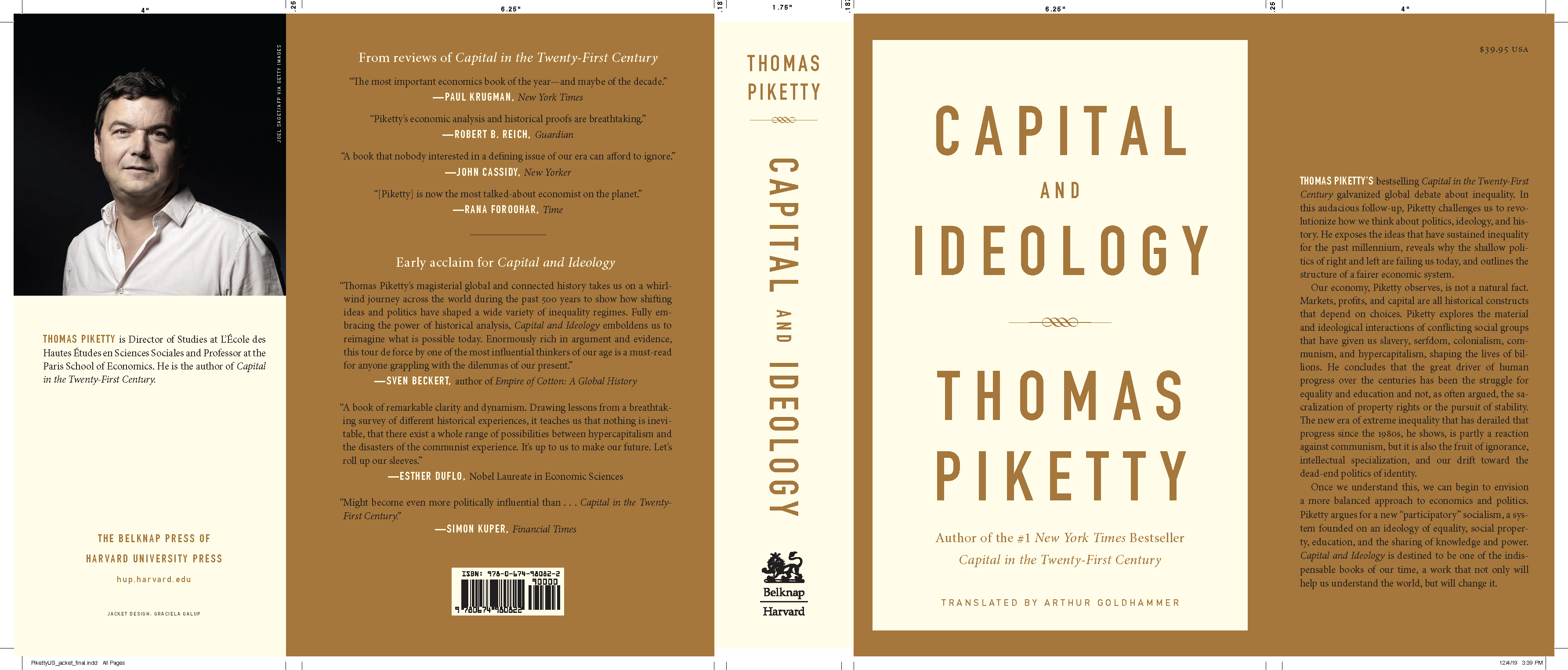
Ingrid Harvold Kvangraven’s Review Of Thomas Piketty’s Capital And Ideology

Nice review of Thomas Piketty’s book Capital and Ideology:

… his [Piketty’s] policy recommendations largely on wealth transfers. For example, rather than interrogating how we as society work, produce and consume, his solutions are biased towards redistribution without changing the core of the system.

This limits his capacity to explain global phenomena. This is clear in his view on the effects of trade liberalization: rather than exploring how the removal of barriers to imports in the 1980s led to a collapse of industry in the global south, Piketty focuses on the loss of income from tariffs. In the same vein, his proposals shy away from discussing the massive rebalancing of global finance and production that is necessary; instead, he focuses on aid transfers to governments, and taxation.

Picture from Thomas Piketty’s Twitter page

Link

Glenn Greenwald On Red Scare

Glenn Greenwald appears in one the recent episodes on the podcast Red Scare.

He talks of various things politics especially on why Bernie Sanders lost and also Jeremy Corbyn.

This at 1:10:00 caught my attention:

Everyone knew he was in favour of Brexit, like everyone knows he hates the EU but he felt like in order to just like worm his way through the Labour party kind of Blairites, he had to pretend against Brexit and be a remainer when everyone knew he wasn’t, so it was like this kind of like complete draining of his vibrancy and passion being forced into this box where he wasn’t comfortable.

Is Financial Times Socialist Now?

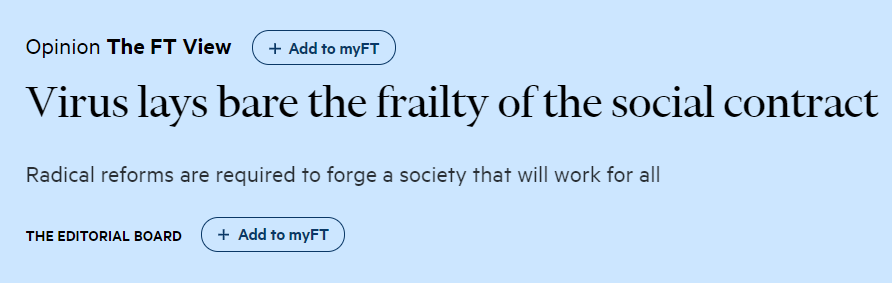
Few days ago, “The Editorial Board” of Financial Times published an article calling for “radical reforms”.

The article says:

Radical reforms — reversing the prevailing policy direction of the last four decades — will need to be put on the table. Governments will have to accept a more active role in the economy. They must see public services as investments rather than liabilities, and look for ways to make labour markets less insecure. Redistribution will again be on the agenda; the privileges of the elderly and wealthy in question. Policies until recently considered eccentric, such as basic income and wealth taxes, will have to be in the mix.

The leaders who won the war did not wait for victory to plan for what would follow. Franklin D Roosevelt and Winston Churchill issued the Atlantic Charter, setting the course for the United Nations, in 1941. The UK published the Beveridge Report, its commitment to a universal welfare state, in 1942. In 1944, the Bretton Woods conference forged the postwar financial architecture. That same kind of foresight is needed today. Beyond the public health war, true leaders will mobilise now to win the peace.

So what explains this shift?

The important point is that FT which just speaks for the ruling class hasn’t become left-wing, it’s just adopting a left-wing policy. The number one point of liberalism—the ruling class ideology—is to prevent a left-wing rise. Anything for that, including the use of left-lite politics, temporarily.

Link

Economics In Ten Episode On Joan Robinson

The latest episode of the podcast Economics In Ten is on Joan Robinson.

Description:

George Bernard Shaw once noted: ‘The reasonable man adapts himself to the world; the unreasonable one persists in trying to adapt the world to himself. Therefore, all progress depends on the unreasonable man.’  What George forgot though was unreasonable women and when it comes to Economics, Joan Robinson was the unreasonable, brilliant woman and wow…did she make progress! Sadly in the male dominated economics world, she’s rather over-looked and this needs to change. She changed the way we thought about markets, she challenged economic orthodoxy, was part of Keynes’ inner circle and offered up her own growth theories. In this new podcast, you will find out all this and more! Guiding you through as always are Pete and Gav, your friendly neighbourhood economists with technical support from Nic (check out his app – cheeky fingers). Music comes from Jukedeck and you can create your own at jukedeck.com. PS Apologies for a brief sound outage that occurs around the 20 minute mark. You might think the podcast is over at this point but fear not you have another hour of fun/learning about the great Joan to go….

Link

Gennaro Zezza And Alan Shipman — Wynne Godley

There’s a nice recent six-page biography of Wynne Godley in The New Palgrave Dictionary Of Economics by Gennaro Zezza and Alan Shipman. Shipman had recently written a full biography on Wynne Godley’s life.

Abstract:

The chapter provides a brief biography of Wynne Godley (1926–2010), a British economist who informed the discussion of economic policy in the United Kingdom and later the United States. Godley was the main contributor to the development of the stock-flow-consistent approach to macroeconomics, setting out models based on rigorous accounting which allowed him to anticipate (ahead of more orthodox forecasters) adverse developments in the UK economy in the 1970s and 1980s, as well as the global recessions of 2001 and 2007–2009.